

What can the Simpsons or any other cartoon teach us about Physics?? I remember my physics teacher, Mitch Johnson, famously saying, “Cartoons are funny because they defy the laws of Physics!” This statement had such a profound influence on me that I wrote an essay to the University of Oxford with it as the theme!
However, we can also learn a lot from proper physics in cartoons as well. The Simpsons are extremely thoughtfully created, living in the balance between physically incorrect scenes and the proper physics we see in the photo! But dare I say that the video has a more of a humorous quality?
Let’s delve into The Simpsons being launched over the sharks! Will the entire family clear the sharks? Why? How can Bart make it across because it looks like he should fall straight down? Well, Matt Groening is a creative genius so he has a few tricks up his sleeve! With the ramp and the water ski rope and handle in the drawing, we are meant to believe that the Marge, Bart, Lisa, Maggie and Homer all took off together with the same speed and were, indeed, all on Homer’s back, maybe?
So, after careful analysis, we can actually consider The Simpsons as projectiles. Projectile motion is defined as motion in two dimensions (2D or Planar) where the only external force on the system is gravity. In these problems we are never really concerned with how the projectile is launched (i.e. kicked, thrown, catapulted, sneezed or hit) as we are with some information as soon as the projectile is in the air, such as the magnitude and direction of the velocity vector.
Since gravity is the only force acting on the Homer and the gang, and gravity is always directed straight down, we know that we can consider motion in this direction to be straight up and straight down. Furthermore, since there are no forces acting in the horizontal direction, we know that the velocity must then remain constant, a concept that will become apparent to you as we get along in the class.
Therefore, by knowing the vector or the components of the vector of velocity, we can predict if and by how much they will avoid the sharks and how far past the sharks they will land!!
Let’s look at a real water ski jump!!!
So, what is Physics??
Some people will try to tell you that it is the study of matter and energy and the interaction between the two. Wait, I missed that because I dozed off!!
I prefer to think of Physics as the Konomi Code to the universe.
Way back in 1985, Kazuhisa Hashimoto was working on the arcade game Gradius. During testing, he developed a shortcut that allowed him to get to where he needed to without dying. The game he developed was too hard! If you entered the code, referred to as the Konomi Code, you would receive the full amount of power-ups usually attained throughout the game!
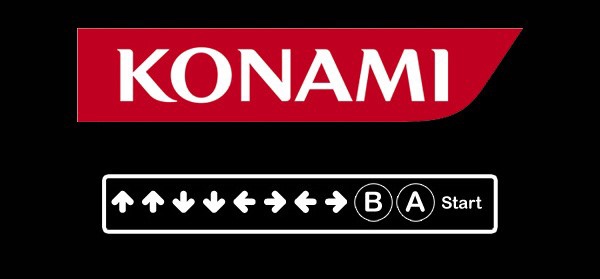
So, the code has permeated pop culture throughout the years. It appears in various forms in Netflix, Google Hangouts, Wreck-it Ralph, The Incredibles, Archer, Fortnite and even the M&S Christmas website would drop down funny characters. For now, just say, “up up down down left right left right B A Start” to Siri and see what she says!!
So, I prefer to think of Physics as the Konomi Code to the universe. We have the cheat codes and hopefully, by the end of the class, you will see the world just a little bit differently!!
The same thing can be said for Michael Jordan’s foul line dunk! How long do you think he was in the air?
You may ask, “Why the heck is there a bee in the blog?” And the answer may surprise you but hopefully it dazzles you as well!
Remember we mentioned the term vector earlier when describing velocity? This means velocity has a magnitude AND direction. Speed can be considered the magnitude of velocity with any directional descriptor (up, down, left, right, east or west) serving to describe the direction. Well, it turns out that position and displacement are also vectors. So if I walk to the movie theater, I can that I traveled 33 meters north to the cinema.
It turns out that the same type of lingo can be used to describe the displacement of a bee during pollination of a bunch of flowers. If a bee zig zags across a small field sipping on nectar, he uses this concept of vectors to find his way home to the hive.
Does the bee have to revisit each of the flowers it pollinated to find his way home?
There is nothing more soothing than a bluebird day, especially in the fall where that high pressure lowers the humidity and gives us incredibly beautiful blue sky! But why? Why is the sky blue? Why are clouds white? Why are sunsets red? We have some beautiful sunsets over Lake Champlain that fill up our Instagram feeds with various hashtags. Light coming from the sun is made up of all the colors of the spectrum each of a different wavelength and appears to the human eye as white light. Ever stare at the sun, well don’t, but if you did, you would see pretty much white. Visible light appears white because it is a combination of all colors. In the visible spectrum, discovered by Isaac Newton, violet and blue are of short wavelengths and red and orange lace larger wavelengths. Remember ROY-G-BIV?
Now, the atmosphere is made up of all sorts of molecules, dust, smoke and all other things we pollute it with. But mostly nitrogen and oxygen. As sunlight passes through the atmosphere, it strikes these very small molecules in which shorter wavelengths are absorbed and then kicked out in a pattern called Rayleigh scattering. Largest wavelengths continue to pass through with out being scattered and, voila, blue sky!! You can think of them as optical tuning forks!
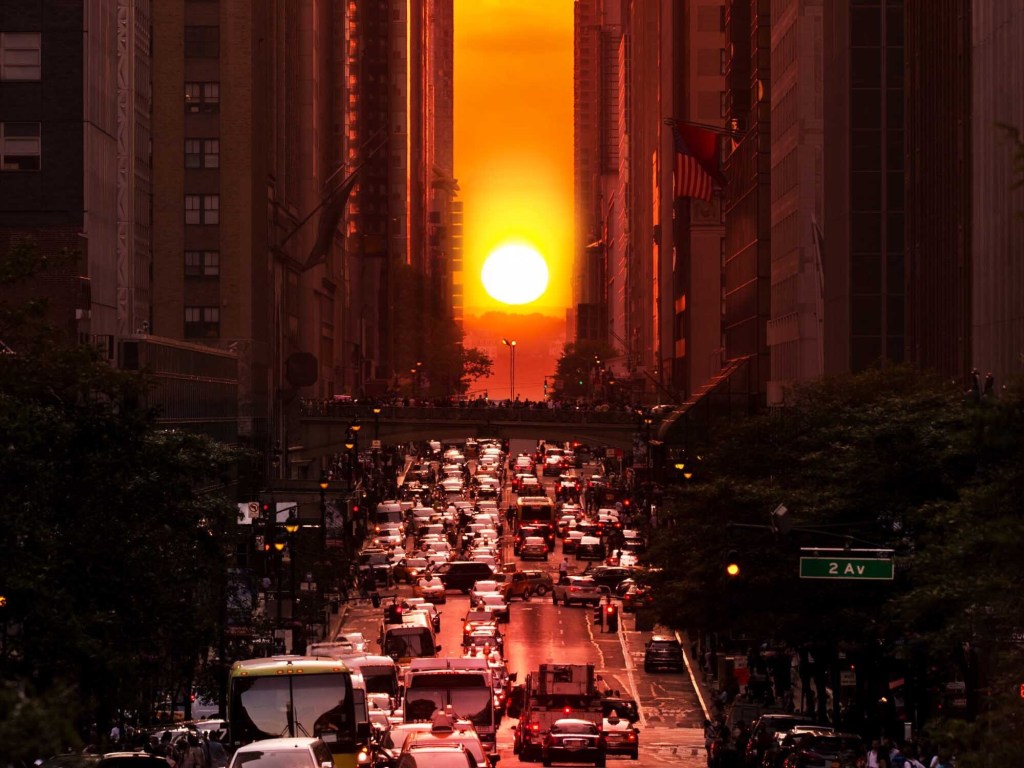
During sunset, the light from the sun has to travel much farther through the atmosphere to reach the earth due to the geometry of its position. This allows for plenty of time for the blue light to be scattered all over and the red light to pass on through to your eye because of your current angle to the sun!!
Pink sky at night Shepherd’s delight? Well, kinda? Weather travels from West to East. Really good sunsets occur with high pressure squash all the molecules down to the surface so more and more blue light is scattered so red really pops!! So a really good sunset in the western sky is going to travel eastward for the morning in the East. The high pressure will be here in Vermont and high pressure means beautiful sunny day!
Does it rain more often on the weekends or is that an Old Wives Tale? It’s true!! It’s 22% more likely to rain on Saturday than Monday on the East coast of the US. As humans, we produce more pollution during the work week that act as microscopic starters for rain droplets!! Therefore, Monday through Wednesday are bright and sunny and then it’s buckets on the weekend!! Check out this video!!
Here are a couple video resources that will help you in understanding!!!
Isaac Newton
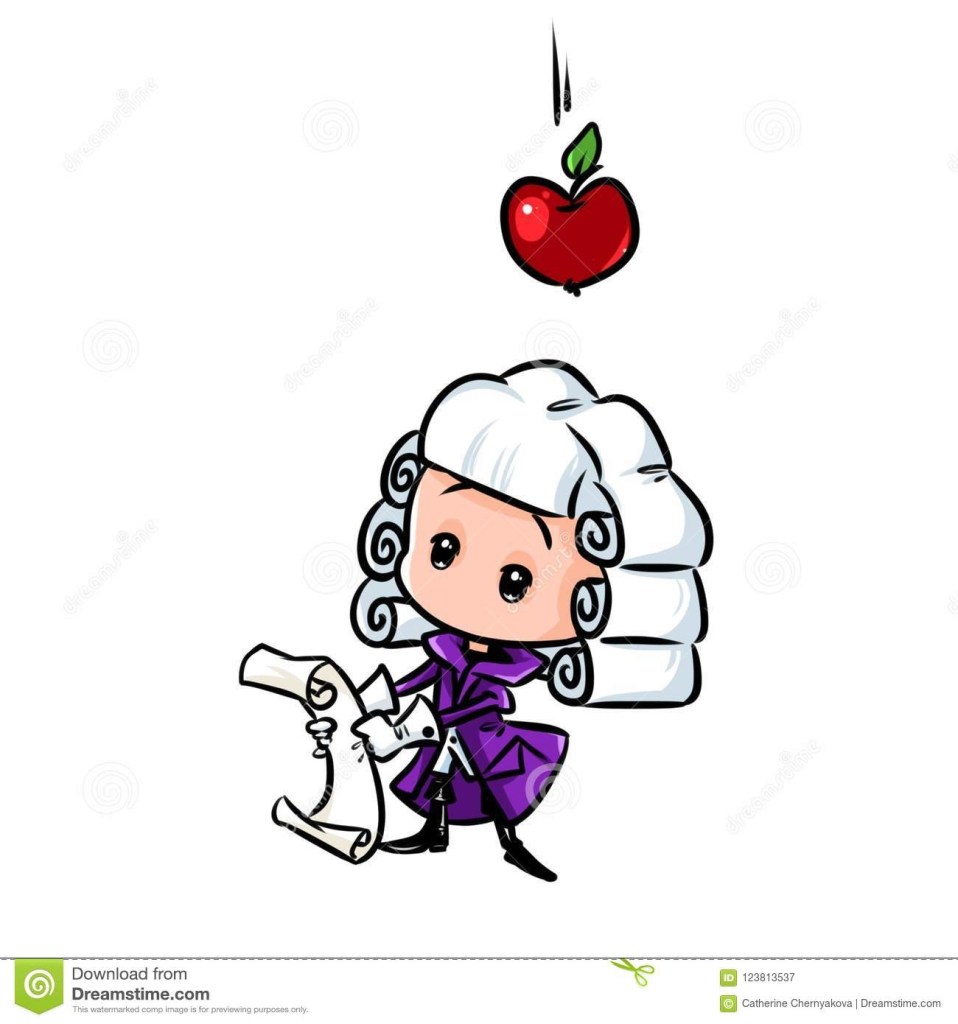
On Christmas Day 1642, the year Galileo died, Isaac Newton was born in his mother’s farmhouse prematurely and barely survived. He was not particularly exceptional and dropped out of school to work on the family farm, which he hated as he preferred books given to him by his pharmacist neighbor. Isaac’s uncle sensed a spark and prompted him to study at Cambridge where he graduated with no particular distinction.
In 1665, a great plague swept through England forcing a 23 year old Isaac to continue his studies at home. It is here where he laid the foundations for physics extending from Earth to the Heavens. He developed Universal Gravitation, Calculus and his iconic Laws of Motion as well as explored the nature of light.
He is somewhat of a superhero and on his grave in Westminster Abbey, it reads, “Mortals rejoice that there has existed such and so great an ornament of the human race.”
In honor of the great thinker, I have developed a Newton of Fig Newtons lab!!!
We will be doing the amazing Speed of Sound lab soon!
 Film Clas