

We live in a complex world! To describe and explain phenomena, it is often necessary to simplify real objects, systems and processes. These simplifications are models and they are tested by using them to predict how new phenomena may occur. In some cases, a simplified model may give results that are “good enough”, like predicting where the salt shaker will land after your cat knocks it off the table using kinematics. In other cases, we must invoke complexity to analyze Clayton Kershaw’s slider, which behaves in a very imaginative manner!!
Models represent large aspects of our course. The “object” model means that we can ignore anything going inside or any internal structure and we just treat it as a point moving through space. This is used extensively in our course to mean you are able to neglect internal structure, like a particle. In contrast, we use the “system” model when internal structure cannot be ignored. This distinction is important because it determines the manner in which we can solve the problem.
For example, according to the problem to be solved, or the process being described, it may be appropriate to describe an atom as a system, paying attention to the protons, electrons and neutrons inside. But other times, we don’t really care what’s happening inside the atom, or a school bus perhaps, it would be entirely logical to use the object model and ignore internal structure.
Consider a ball. Whilst a ball is simple, it does have internal structure. A ball can be squeezed or spun. If the question you’re trying to answer depends on the fact not all parts of the ball move the same distance when you do something to it, we must refer to it as a system. If, however, the properties we are trying to study do not depend on the internal structure of the ball, such as predicting how far a soft toss may go, we can simply use the object model!!
A system can be complex, like the solar system. If we need to know how the sun or the planets move within the solar system, then we must treat it as a system. However, even with something large and complex as our solar system, if we look at how the solar system moves throughout the galaxy, we could simply use the object model. Living things, like grizzly bears and humans or flowers, are some of the most complex systems around. In order be able to chase you in the woods, the grizzly needs to convert that salmon she ate from the river into energy. Similarly, humans use bagels to give them energy to dance in the mornings. These are very intense systems and processes, but sometimes we are only concerned with how far we jump. In this case, we get a good approximation by treating the jumper as an object once we know the initial velocity and launch angle of the Center of Mass!
So, when we ignore internal structure of a system, we model it as an object. Choosing to model something as an object or a system is fundamental to determining how to describe and analyze a physical situation.
In our class, we use the object model to imply that you can neglect the internal structure of the system. To determine if you can use the object model, we must make sure we don’t need to attribute anything to it that requires internal structure. We can use the object model as long as all points on the system move together in exactly the same way. In other words, we treat it as an object if you can completely describe the system by a single point in space and its motion with the motion of that point. When we cannot neglect internal structure, like if the system’s shape changes or it spins, we use the system model!!
An object model can be defined when it is not necessary to consider internal structure. When internal structure plays a role in behavior we must use the system model defined in terms of the composing objects.

In one or more sentences, justify your claim that an object model is or is not appropriate for the bold word in each of the following contexts: when the system model is needed, reflect on the roles played by internal structure!
(a) A description of the motion of Earth as it orbits the sun. (The object model. The motion is directed simply by the path of a single point.)
(b) An explanation for the motion of Earth as it orbits the Sun. (Since both the Earth and Sun were highlighted, we are asked to describe this motion in terms of the interaction between them, so we use the system model.)
(c) A description of the motion of Filomena on a bike coasting down the hill to the baseball field. (If Filomena’s interaction with the bike is important, we need the system description, but in many cases this interaction does not need to be taken into account. Such is the case presented, Filomena coasting indicates that she is not interacting with the bike so she and the bike can be taken as a single object.)
(d) The mass of the water in Fred the Goldfish’s bowl. (The property of mass requires no structure to understand so the object model can be used.)
(e) Water poured into Fred the goldfish’s bowl, assuming the shape of the bowl. (The explanation of the shape of the water requires the description of the interaction between the water and the bowl. We need the system model.)
(f) Janet the Ice Skater gliding in a straight line across the ice. (We can use the object model since Janet’s position can be taken as a moving point.
(g) Janet spinning on the ice. (All points on Janet are not moving in the same direction at the same speed during this motion, so Janet is a system!!)
In these cases, if you must include the interaction between objects, which affect the behavior of the system, or the internal structure of the system is demonstrated because not all points move in exactly the same way, we must use the system model. When the behavior we are interested in can be sufficiently described by the position of a single point in space, the object model is appropriate.
The distinction between an object and a system is foundational to an understanding of Energy!!

We’ve described the notion of an object. We’ve explained how to use the concept of force to describe an interaction between objects and systems. Now, let’s begin applying one of the most fundamental ideas in all of Physics: Conservation!!
The changes that occur as a result of interactions between objects and systems are constrained by conservation laws. Conservation is often poorly understood because of its connotation in everyday life. That is, if I want to conserve butter because the grocery store is closed and I’m making grilled cheeses, I’m going to use less butter. Or I’m not going to make popcorn so I can use it all for the cheeses. Or determining whether to make popcorn or cupcakes, depending on which requires less butter.
In physics, we however mean something much more profound than simply “using less” when talking about conservation. In physics, a conserved quantity is a quantity that can be transferred between objects or systems, or converted from one type to to another but is neither created nor destroyed. When quantities are neither created nor destroyed, the amount of that quantity does not change. This simple concept gives rise to some of the most powerful and fundamental laws in all of physics: The Conservation Laws!!
Conservation laws constrain the possible motions of the objects in a system. Or the outcome of the interaction or process. A conservation law is a statement that a measurable physical quantity of a system does not change as the system evolves over time. This physical quantity can be used to characterize a system.
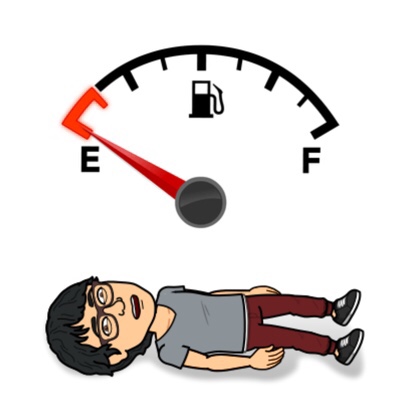
We use the term Energy almost everyday, mostly when talking about how sleepy tired we are. In physics, Energy is defined by a scalar quantity used to measure the state or motion of an object or system. Energy is always conserved but not all energy is equally as useful. So when we say we want to conserve Energy for the big game, we really mean we want to to not waste the energy that is most useful to us!
So, since conservation also considers the transfer of a quantity, we need to define our system to know how to apply a conservation law.
We will define a closed, isolated system as one where no energy or matter is transferred to, or from, the system and there are no interactions between objects in the system and objects outside the system.
A force is also a way to describe the interaction between two objects, so another way to define an isolated system is a system for which no forces are exerted on objects inside the system by objects outside the system. We will use forces to transfer energy. The total amount of energy in a system cannot change and all interactions and processes in the system are constrained by this fact!
In an open system, energy can cross the boundary of the system in which case conservation no longer means the energy in the system is constant. It means that changes in energy in the system are equal to the transfer of energy into and out of the system by interactions with other systems or processes.
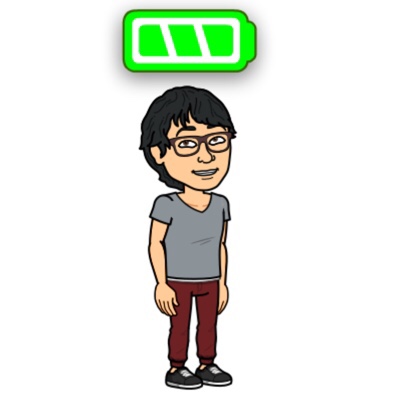
The Conservation of Energy
This is literally the most pervasive conservation law across all of Physics.
Energy is used in every living and breathing process (moving). Within these processes, there are different types of Energy including kinetic, potential and internal. The Law of Conservation of Energy states that energy can be converted from one type to another but never destroyed. Energy is a scalar quantity used to measure the state or motion of an object or system. Ok, so what in the hay does that even mean??
It’s easier to begin our discussion of Energy by considering one of the ways to “transfer” energy. To delve into how energy is transferred, it is only logical to first explore the concept of Work!! Again, work, like energy, has many meaning in everyday life.
In Physics, work is defined as the transfer of energy.
Specifically, work is defined as the transfer of Energy from one object or system to another through a mechanical process that happens when a force is exerted on an object or system along the direction of motion as the object or system moves!! An example is lifting a clean pan up to the shelf above the stove or when Harley pushes her bobsled across the snowfield. In each of these cases, the point of contact, where the force is exerted on the object, moves.
The definitions of Work and Energy reference each other. If work is the transfer of energy, we will see that, if an object or system has energy then that object or system has the ability to do work!! (It’s kinda like when Ben Gates decides to steal the Declaration of Independence in order to protect it!)
One type of energy is Kinetic Energy (K) which is the energy an object has due to its motion. An object we Kinetic Energy has the ability to do work, that is a moving ball has the ability to displace objects in its path. For anything for which we use the object model, the only type of energy that it can have is kinetic energy. This is because by the definition of an object, we cannot change its shape, or the way its internal components are moving, since an object has no internal structure. Conversely, Systems, since they have internal structure, can have internal and potential energy!
An open system can exchange both energy and matter with its surroundings. A closed system cannot exchange matter with its surroundings. An isolated system cannot exchange matter or energy with its surroundings. Categorize each of the following systems as (i) open (ii) closed or (iii) isolated and describe evidence from your own experience to support your categorization.
(a) 🌎 Earth 🌎! Open. The system is open because energy and matter are constantly entering our atmosphere. We see energy in the form of light from the Sun, stars and matter as shooting stars burning up in the atmosphere.
(b) You!! Open. You take in matter and energy with the pancakes 🥞 you ate for breakfast, emit energy through heating and you breathe in and out exchanging gassed with the environment.
(c) a Yeti cooler with the lid shut! Closed. The ice eventually melts so we know energy enters the system but until the icy 🥶 water is removed, it’s relatively closed!
(Q) Describe how you know that winds blowing across a field of tall grass have energy and that work is done by the wind 💨 on the grass. ((a) The wind has energy of motion (K). This gives the grass energy of motion (K). Work is defined by this transfer of energy!)
☎️ The work done by a constant force exerted on a moving object depends on the magnitude of the force and the distance the object moves through in the direction of the force! 🎙
Loretta pushes a crate of Kimball Brook whole milk up a ramp. The amount of work Loretta does depends not only on how hard she pushes on the crate, that is, the magnitude of the force she exerts but also on the distance over which she moves the milk. Or the displacement of the crate.
Similarly, if Max, in detention, has to push desks around the gym, he will be more exhausted if Principal Carol asks him to push the desks all the way across the gym rather than only to the first foul line. That is, if he had to exert the force over a longer distance. On our mini pool table, K gets transferred to one pool ball from another as two balls collide without friction or deformation. The K of the desk does not continue to increase as Max pushes because of the large resistance to motion provided by friction between the floor and the desk.
These examples suggest how we should define the work done on an object or system by a force exerted on an object or system. If a constant force on an object as it moves through a straight-line displacement, d, and the force, F, is in the same direction as the displacement, the work done by the force is equal to the product of the magnitude of the force and the magnitude of the displacement over which the point of contact where the force is exerted on the object moves!!
W = Fd cos(theta)
Theta is the angle between the force and the displacement!

This is force OVER a distance.
It is important to keep track of what object exerts a given force and on what object that force is exerted. It is equally important to keep track of both the object that exerts a force and the object on which the force does work. For example, when Loretta pushes the milk crate up the ramp, the object exerting the force is Loretta and the object on which the force is exerted and on which work is done, is the milk crate.
Just like a force must be exerted by something external to the object or system, work is done on an object or system by an external force. Work is one way in which we transfer energy!

Work is a scalar that can be positive or negative. (a) Positive work adds energy to a system and speeds things up and (b) negative work removes energy from a system and slows things down!!
Now, if the force used to pull your puppy in a wheelbarrow is not exerted in the direction of the objects motion, the force, F, that you exert on the wheelbarrow is angled with respect to the displacement, d, of the wheelbarrow. So, there is only one component of the force in the direction of the displacement. This is the horizontal component or F cos(theta)!
W = Fd cos(theta)
The work done by a constant force, F, angled at (theta) from the direction of the object’s displacement, d.
So, let’s 👀 at some special cases!
(a) if the angle between F and d is greater than 0 (zero) but less that 90, then the cos (theta) is less than 1 but still positive. Therefore W is less than Fd but still positive. (0 < (theta) < 90).
(b) if F is perpendicular to motion, cos(90) = 0. In this case, work is equal to zero! This is the work done by the puppy, W(puppy) = 0, since the force of the puppy is mg directed downward and motion is ——->. The angle between F and d is 90 and therefore the adorable does no work to ride along!!
(c) if the angle, theta, between F and d is greater than 90, the value of cos(theta) becomes negative. Therefore, work done by this force is negative, W < 0. This is when Diana tries to slow down a rolling cart of potatoes!! The force, F, that Diana exerts on the potatoes is directed opposite the cart’s displacement, d, so the angle is 180 and the cos(180) = -1. This means that Diana does negative work (-W)!!
Alas, remember the rule?? When force, and therefore acceleration, is directed opposite the object’s velocity and displacement, the object slows down!!
🙌 Therefore, negative work slows an object down and positive work speeds an object up!! 🏇🏿
This makes complete sense as Work is the transfer of energy, you make a positive transfer of energy, you increased the energy of the system receiving it. If you make a negative energy transfer, you remove energy from the system.
With d to the right, F(D on 🥔 ) <————> F(🥔 on D) = -F(D on 🥔)
(a) as Diana tries to make the cart of potatoes slow down, the cart and her hands move together to the right. They have the same displacement since her hands and the cart are in contact.
(b) the F of Diana on the cart is opposite to the cart’s displacement. Hence (theta) = 180, cos (theta) = -1, and Diana does negative work on the cart of potatoes.
(c) per N3L, the cart exerts an equally strong force on Diana but in the opposite direction, that is, in the same direction of the displacement of Diana’s hands. So the cart does positive work on Diana.
For objects that are in contact, if object A does negative work on object B, then object B does an equal amount of positive work on object A!

Always remember…negative work removes energy from a system and positive work adds energy to a system!
🏓 The Work-Energy Theorem 🏑
The Work-Energy Theorem is a general relationship between the total amount of work done and the change in the object’s speed. Remember that for something to be modeled as an object, all points on that object must move the same distance in any motion. So the point of contact of the force and the center of mass (CoM) have the same displacement.
An object can only have Kinetic Energy!!
K = 1/2 mv^2
Again, units are Nm or Joules.
The Work-Energy Theorem states that the Net Work done on an object is equal to the change in kinetic energy.
W(net) = K(f) – K(i)
W(net) = 1/2 mv(f)^2 – 1/2 mv(i)^2
When an object undergoes a displacement, the Work done on it by the Net Force equals the change in the object’s kinetic energy, that is, the object’s final kinetic energy at the end of displacement minus its initial kinetic energy at the beginning of displacement.

It is valid as long as the object model is appropriate, such as when a system is rigid, that is, when it doesn’t deform. The Work-Energy Theorem is also valid if the object follows a curved path and the forces vary, not just straight line motion with constant forces. Remember it’s the New Work done which means the sun of all the work done by all the forces!!
What does the Work-Energy Theorem mean?
If Carl gives a cart a push along a frictionless surface, the Net Force on the cart equals the F that Carl exerts (because Fn and Fg cancel and there is not friction), so the work Carl does equals the W(net) by the Net Force. The cart starts at rest, so v(i) = 0 and the cart’s K(i) = 1/2 mv^2 = 0. After the push, the cart has a final speed v(f) = v and the K = 1/2 mv^2.
W(Carl on cart) = K(f) – K(i) = 1/2mv^2 – 0 = 1/2 mv^2
In words, the cart’s Kinetic Energy equals the Work done to accelerate it from rest to its present speed. Now imagine you have pushed the cart over to your friend Lyra to stock the potatoes and she brings it to a halt. The cart’s K(f) = 0 and K(i) = 1/2 mv^2. The Net Force is the force exerted by Lyra so the work she does equals the Net Work on the cart.
W(Lyra on cart) = K(f) – K(i) = 0 – 1/2 mv^2 = – 1/2 mv^2
Therefore, our second notion of Kinetic Energy is an object’s K equals the amount of work it can do in the process of coming to rest from its current speed. Remember, energy is the ability to do work!!
You know this, which is why you duck when Phil throws a nicely packed snowball at your face!!

Potential Energy
A system defined as a single object has no potential energy or internal forces, but external forces can be exerted on it. If a system has potential energy, it is due to internal interactions, so a system with potential energy must be made up of more than one object or be something for which the object models fails (it has internal structure or it can be deformed).
For anything for which the object model can be used cannot have potential energy. Potential Energy is always associated with two or more objects within a system that are interacting via conservative forces, such as gravity, or with the systems that do have internal structure, like springs! Practice saying things like, the ball-Earth system has potential energy! 🏀 – 🌍 system!
For a force to be conservative, (a) it must depend on a reversible change in configuration such as the change in length of a spring or a change in separation between the Earth and an object and (b) no energy must be dissipated to exert it. Potential energy is associated with reversible changes in a system’s configuration!!
Quantifying Potential Energy
An object near the Earth’s surface gains K when it is dropped. Let’s use an emphatic “mic drop” as an example. When the microphone is held out at shoulder’s length, the 🎤 has no K because it isn’t moving. When DJ Stir Fry drops the mic, it falls to the stage, gaining K as it does and possibly leaving a small indentation on the floor by exerting a large downward force on the floor over a small distance. If we treat the 🎤 as an object, then the Earth exerts an external force of gravity that does work on the mic as it falls to the stage, increasing the mic’s K. Since Fg is conservative, we can instead think of a potential energy associated with this change in location of the mic. Potential Energy has come from the configuration of the system. The shape of the mic doesn’t change but the distance between the mic and the Earth’s surface does change.
If we choose our system to be the mic and the Earth, we can no longer use work done by the force of gravity (Fg) because Earth is no longer outside of the system!! Therefore, Fg is no longer an external force! Instead we talk about Gravitational Potential Energy (Ug) of the system.
How we choose our system completely determines whether we must use Work or Potential Energy (Ug) to describe effects of conservative interactions.

There are two ways to determine the amount of potential energy stored in the Earth-mic system.
(1) Compare the potential energy due to a reversible change in the configuration of a system to the work that would be done if the object was isolated. If the system is just the 🎤 and it has a mass m and is initially a height h above the floor (we consider the floor to be h=0) as it falls, Earth (which is not in the same system, so exerts an external Fg on the mic in its direction of motion) would do an amount of work on the mic.
Wg = Fd cos(theta) = Fgh cos(theta) = mgh
From the Work- Energy Theorem, this is equal to the K that the dropped mic has gained just before it hits the stage. So we say that the gravitational potential energy (Ug) of the Earth-mic system before the ball was dropped was Ug = mgh and this potential energy was converted to potential energy as the mic fell. So the change in gravitational potential energy is the negative change in K, (change) Ug = -mgh.
This is why changes in energy are quite advantageous in problem solving!
(2) Consider when the initial potential energy came from the Earth-mic system. To see this, consider when the weightlifter raises the mic from the floor to height h. During the lift, the mic begins with 0 K and ends up with 0 K (at rest at shoulder level). The net change in K = 0 and Fg could do no work!
Since Fg in internal to the Earth-mic system, the positive work that DJ Stir Fry did to raise the mic must provide the potential energy, mgh, associated with the mic when it reaches height h (assuming the floor is h=0). The potential energy stored in the configuration of a system because of a gravitational interaction is called gravitational potential energy, mgh. DJ Stir Fry converted internal energy into the work done on the mic. Anytime energy comes from changing the configuration of a chemical of a chemical in food, some of the internal energy goes into warming up the DJ. In general, if an object of mass m is at a vertical coordinate y, the Ug of the Earth-mic system is mgy.
Ug = mg (change)y
When, The DJ raises the mic, Ug of the Earth-mic system increases!! When the DJ lowers the mic, (change)y decreases and the Ug decreases.
As the mic falls, Fg does work on it and this work goes into changing the object’s K. The total work done,Wg, by Fg along the curved path is the sum of the Wg for each segment along the path.
In words, the work done by gravity on an object if we choose our system to be the isolated object is equal to the negative of the change in gravitational potential energy of the Earth-object system if we choose our system to be the Earth and the object.
If an object descends, we can think of it as the downward Fg doing (+) work on the object or as the gravitational potential energy of the Earth-object system decreasing (change is (-)). If an object rises, we describe it as the downward Fg doing negative work on it or the gravitational potential energy of the Earth-object system increasing (change is (+)). If an object begins and ends its motion at the same height we can describe it as Fg doing no work on it or as there being zero net change in the Earth-object system’s gravitational potential energy (Ug)
Finally, remember, we must define our system, so we must only choose one of these interpretations.
(1) Either Earth is in the system and we use potential energy.
(2) Or Earth is out of the system and we use Work.
However the system is defined, we will get the same results!!

Spring Potential Energy!!
If we take a tennis ball 🎾 and chuck it at the wall, we see that the point of contact of the force, F, does not move as it is compressed against the wall but we do see that the Center of Mass, CoM, of the ball gets further away from the wall as it expands. Remember, work is determined by the displacement of the point of contact while the force doing work is being exerted. However, the Work-Energy Theorem describes the motion of the CoM for the object model to be valid. This means the displacement of the CoM while the force is being exerted describes the change in K of the system.
Now, given what we know, our first reaction could be that the wall has done work on the ball. After all, it has lost all of its K at the instant it is fully compressed against the wall and changes direction.
And it looks like an object, am I right??!!!
The wall does no work, however. Our definition of work done on an object states that the force must be exerted on the object as the point of contact of the force on the object moves. We see the point of contact of the force does not move so the force of the wall on the ball does no work!!

Have a think!!! I could lean against the wall all day and I’m not going to start moving!!
Therefore, we must consider the use of the the system model in the case of our tennis ball. For a system, the displacement of the CoM and the point of contact where the force is exerted can be different and, therefore, other types of energy other than K can change!!
So, the wall is exerting a Fn on the ball but the point of contact does not move so the total work done by the wall is zero. The wall transfers no energy to the ball. However, the CoM of the ball does change whilst the wall is exerting this force on the ball. So the ball’s K does change. Now let’s write the full Work Energy Theorem!!
W = (change) E = (change) K + (change) U + E (thermal)
(a) (change) K of the system is equal to the force x displacement of the CoM.
(b) (change) U due to reversible changes in its configuration.
These ideas about displacement of the point of contact relative to the CoM direct us into the object or system model which then determine whether or not we use the Work Energy Theorem or the Conservation of Energy!! This is also relevant to rigid systems where the PoC and the CoM are in different spots but move relative to one another, that is, in the same direction and the same distance.
Work Done by Varying Force
Often times, a force of variable magnitude does work on an object or system. Par example, you must do work to stretch a spring. That force you exert on a spring to stretch it is NOT constant. The further you stretch a spring, the greater the magnitude F you must exert.
 Film Clas